
House and Home
Here at Tips4U we appreciate that most people like to think that their home is their castle. Shut the door and it can be a refuge from the rest of the world outside.
Not everybody is too worried about keeping up wiith the Joneses, but it's always nice to live in a house that is your comfort zone as a family or even on your own.
Tips4U in this section will cover the following things:
- Home DIY
- In the garden
- Maintenance
- Pets
- Home entertainment
- Cooking
HOME DIY
Tips4U - Five Money Saving DIY Tips
You don’t need to splash out to keep your home in good working order – we reveal some expert tips to save money and get your DIY jobs done. Don’t be put off by the cost. While buying a new kitchen will cost you a minimum of £700 (in the UK in 2016), there are plenty of projects you can do for free. Here, we reveal five top tips for frugal home fixes.
1. Is it an easy DIY project?
Before hiring a handyman, work out if you can do the job yourself. If it’s a basic round-the-house repair like painting, clearing a blocked drain or draught excluding, rolling up your sleeves will often be cheapest. We'll give you a list of DIY jobs we think you can do yourself, later.
2. Use good quality tools (or at least the best you can afford)
Buying any old equipment can be a false economy – invest in some decent, long-lasting tools to help make easy work of your home DIY. Tests by the experts found Best Buy cordless drills that are excellent at both drilling and screwdriving. But we also uncovered drills that struggled on hard surfaces or were slow. Extend the life of your tools by ensuring you're using them properly - check out the video guide on drilling tips (coming soon).
3. Be a savvy shopper
Decent DIY tools and the materials you need to do the DIY job don’t need to break the bank. Shop around for the best price, based on the opinions of others that have done the job before. A search on the internet can provide you with useful information and it's probably best to rely on big brand, reputable sources for the information.
4. Research home remedies for cleaning
You don’t always need shop-bought cleaning products to tackle stubborn dirt around your home. Our tests found that one of tepid water, salt, white wine or washing-up liquid work as well as chemical carpet stain removers. Come back soon and we'll have a more comprehesive list here for carpet cleaning!
5. Hire a trusted handyman
Be realistic with your expectations. If you’re a DIY dabbler rather than a devotee, and you’re looking at a complex task that will cost a bomb to fix if it goes wrong, then hiring a professional could be more economical (and safer). Use Which? Trusted Traders to find a reliable tradesperson in your area (this is for the UK, there will be something similar for your part of the world).
IN THE GARDEN
Tips4U - Holiday Garden - How to Look After Your Garden When You’re Away
It's such a pain, abandoning a tomato when it's just ripening, but it can easily happen when you get away for your vacation. Fruit and veg decide to produce their best just as you have to leave – on business, on holiday – somewhere far from the hosepipe and fruits of your labour. It's even more painful to return to a garden of dried out, withered crops. To keep your garden going in your absence, a little planning is called for. Here's a few Tips4U
1. Keeping the garden watered while you're away
- A day or so before you leave, weed your beds (weeds compete for water).
- Mow the grass and pile the clippings near the plant beds. This kills two birds with one stone. Not only will the lawn be tidier when you return, but you now have a mulch.
- As late as possible before you leave, deeply water your veggies.
- When everything is thoroughly soaked, spread the soil with clippings or, if you don't have clippings, compost or other mulch. You could even place large stones or planks of wood between the rows of vegetables. The idea is to ensure the soil beneath remains damp for as long as possible. Don't use plastic, as you want any rain that does fall to soak in.
It's worth remembering next year, if you don't already, to water more deeply and less frequently from the start of the season. This encourages plants to send roots deeper and means they'll cope better for periods without water than those whose roots are near the surface because they've always been lightly watered.
2. Keeping vegetables comfortable
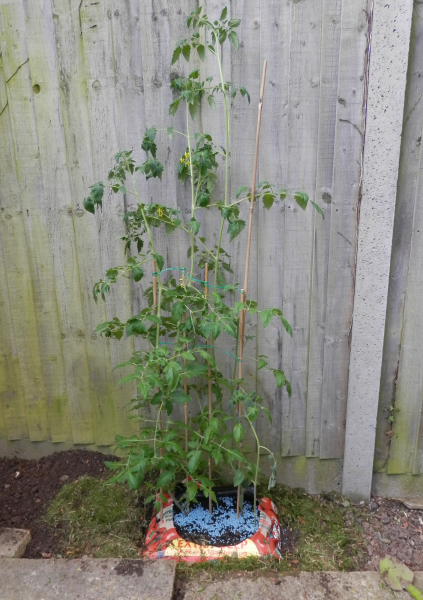
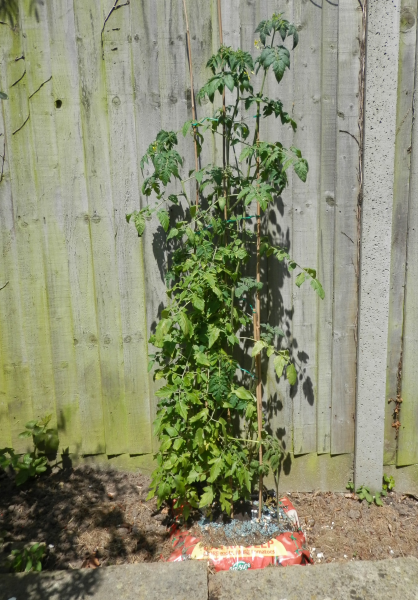
Stake and tie any plants that will need it when they're bigger, even if they're not big enough yet. Tomato plants never fail to amaze us with massive growth whenever you turn your back and too soon they start resting on the ground.
Just how much you decide to pick before you go depends on how long you'll be away. Pick anything that's ripe and, for any absence longer than a couple of days, pick produce that is nearly ripe (tomatoes and strawberries will ripen in the fridge). For longer absences, remove young beans, immature peas and baby courgettes as, if these mature on the vine, the plant will stop fruiting.
The crops that you'll most likely lose are the green leafy ones, such as lettuce, cress and oriental salads - you can slow up their tendency to run to seed by erecting shade protection.
 |
 |
3. Plants in Pots
Pots are obviously more vulnerable to drying out. Group them close together to create a damper micro-climate for them and reduce evaporation from the soil and water loss through the leaves. They should, where possible, be placed in a position that's shady for most of the day but where they'll still get rain on them. Water thoroughly and cover the soil surface with a permeable mulch.
Watering devices can help. Water globes are widely available, but you can create your own. Ensure that the soil in the pot is already damp. Fill a glass wine bottle (or similar) to the top and quickly plunge the neck into the pot, screwing well into the soil so that there's a good contact between earth and water. The water level will stabilise within the bottle and the soil will gradually draw the moisture down as it needs it. It's a good idea to try this out in the week before you go to see if the water lasts as long as you'd like and if very thirsty plants, like tomatoes, still tend to wilt. Increase the water available, if necessary, by adding more or larger bottles.
4. Find a Garden Buddy
In an ideal world, we'd all have someone we trusted to look after our gardens while we're away – someone as keen as we are, and whose gardens we'd look after in return. Sadly, not all of us have such a buddy, but you might consider joining your local gardening club or horticultural society in the hope of making such a friend for the future.
It's more likely that, if you find a helper, it'll be a less horticulturally enthusiastic neighbour. The temptation to write pages and pages of notes, or take him/her on a long, detailed journey around the flower beds before you leave should be resisted.
By all means, show them round, but make everything as simple as possible.
- Leave watering cans by the tap (faucet) or the hose connected and unravelled as far as the vegetable beds.
- Group pots together so that your helper doesn't have to traipse round the garden to find them.
- Make clear what absolutely must be watered (perhaps insert a flag by particular plants), and what it would be really nice of them to water if they have the time.
- Bring a present home. A box of chocolates says "I've appreciated your effort," and your neighbour will feel happier to help again.
You should also tell them to help themselves to the crops. Not only does this bonus mean they're more likely to remember to nip round but, as mentioned above, continuous harvesting encourages continuous fruiting, so you won't miss further harvests on your return.
Don't expect perfection. These are your babies, and no one is going to treat them as well as you are.
A Robin's Story
This is a true story that happened to one of the team. We thought there were some nice little points that could be considered Tips4U.
Chapter 1 - A beautiful Spring day (UK 21st May)
It was a beautiful afternoon late in May and Judy and Gary were sunbathing in the warmth of the early summer sun in Gary's back garden.
Then Judy spotted the Tin pot partly hidden in the bushes and noticed it was skew-whiff. The Tin pot had been in the bushes for a couple of years and was intended as a nesting box for Robins. Gary had recently moved it when he had been pruning the bushes. Judy complained to Gary that he had not put it in the bushes at the right angle, it needed to be fairly level. At the angle it was, when it rained the poor Robins would get a right old dowsing of water coming in their home, and who would want that, be they man or beast (or Robin).
Judy bravely clambered into the thorny bush to rectify the situation putting the Tin pot level so that the rain would not get into it. They both felt happy with their good deed for the day, to help any future Robins who might make their home there.
Gary teased Judy as they continued their enjoyment of the beautiful sunny day as a couple of Robins fluttered around the tin pot and Gary kept implying the Robins were not happy that Judy has disturbed their nest. But he was only teasing her with playful banter.
That night they both went to bed feeling at one with the world and nature for the good deed they had done.
Chapter 2 - That's a surprise!
Next morning Gary woke up to another beautiful day, he didn't have work today, whereas Judy did. He was having a lazy day.
He'd had his breakfast watching television and was putting on the kettle for his first cuppa of the day. As was quite often his habit, he stepped out into the conservatory to look out over the back garden which was in full bloom with flowers and shrubs.
Shock! Horror! There was the Tin pot, not in the bush, but in the middle of the lawn!
Even more Shock! Horror! There was a ginger and white cat lying in front of it and looking in!!
Gary froze for a moment unsure what to do. The cat had spotted him and was staring at him with indignity at being disturbed whilst playing his game. Gary decided to give the cat a good scare and launched himself towards the door out to the back garden. But the cat was quick and before Gary even made it to the door the cat was off, taking something with it dangling in its mouth. The cat scrambled over the high garden fence and was gone.
Gary stood in the conservatory still in a state of shock and horror and could only guess that the something dangling from the cat's mouth was a tiny Robin. After a few moments he decided to go and pick up the Tin pot to check it out and put it back up in the bush.
As he peered into the Tin pot he immediately saw that there was indeed a nest in there, the Tin pot was well padded out with moss and grass. Then to his surprise he saw a movement in the moss and grass, lo and behold there was a baby Robin, and not just one but two. They looked pretty unscathed from their encounter with the horrid cat and looked up at Gary as though expectant of getting food by the look of it.
In a rush Gary put the nest back up in the bush and retreated to the conservatory to watch out for whatever might happen next.
Chapter 3 - All's well that ends well
After a few minutes there was the fluttering of the adult Robins around the Tin pot, but they seemed to flutter away again quite quickly.
Gary decided to investigate further and the Tin pot practically fell out of the bush as he ventured in to have a look at it. He took it out and realised that in his haste he had put it up at quite a high angle (that rain would be in there at the next shower and he'd be in trouble with Judy again). He also realised he'd put the Tin pot back upside down so that the poor baby Robins were buried under the moss and grass.
He quickly rectified this and properly wedged the Tin pot in place in the bushes and at a nice flat angle.
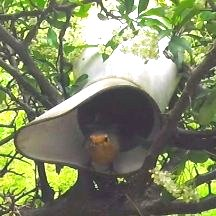
He retreated to the conservatory again. It wasn't long before the happy Robin parents were back again and this time Gary could see they were going back into the Tin Pot. Gary watched in pleasure for short periods during the rest of the day and the parents were always fluttering to and from the Tin pot. On the way in they had food hanging from their beaks and when they fluttered away it was gone (inside the tummy's of the tiny baby Robins no doubt).
The moral of the story for Tips4U:
1. Probably best not disturb nests during the nesting season
2. Do put any Tin pots at a level angle so they don't get wet when it rains
3. Make sure they are well wedged in, wherever you put your Tin pots
4. Cats can be horrible when they want to be
HOME MAINTENANCE
Tips4U - Keep Your House in Tip-Top Shape: A Handy Home Maintenance Checklist
When buying a home, most people probably first think of the financial responsibility. Don’t let yourself forget, however, about the time and labor that home ownership also requires. Just like regular oil changes for your car keep your engine happy and healthy, keeping up with regular home maintenance tasks will keep you from future headaches and wasted money.
It can be intimidating to think about these various tasks, especially if you’re a new homeowner. It’s a long list — there’s no denying that. The good news is that you can do the majority of it on your own without much experience. Google is your best friend, and if you really get stuck, call up your local handyman to help you out.
In order to maximize your efficiency and actually get all of these tasks done, you might want to create a home maintenance calendar for yourself. Whether online or on paper, you can jot down small, regular tasks for each weekend and not be too overwhelmed. We’ve listed tasks that need to be done monthly, quarterly, and biannually. We’ve also given you a list of tasks to be completed seasonally. Not every expert agrees as to which task needs to be done in which season, so this isn’t a black and white list, necessarily. Do what works for you and your schedule, and as long as all these things get accomplished, your home will stay in good order for years and years to come.
1. Monthly Home Maintenance Jobs
- Inspect, and possibly change out HVAC filters (normally part of your air conditioning system if you've got one). Many experts will say to change the filters monthly, but that’s not always necessary. For smaller families without pets or allergies, you’ll likely be okay changing the filters every 2-3 months. If the filter is dirty, change it out, otherwise inspect it again next month. I’ve also been told by handymen to go with cheaper filters and replace them more often versus going with the expensive filters.
- Clean kitchen sink disposal. There are a bunch of ways to do this, but the handiest and best all-around solution seems to be vinegar ice cubes. Put some vinegar in an ice tray and let it freeze, then run the ice cubes through the disposal. It freshens it, but as a bonus, ice sharpens the blades. You’re welcome.
- Clean range hood filters. If you’ve never thought of doing this, you’re in for a real “treat” when you get that filter off the hood to clean it for the first time. The Family Handyman suggests simply using a degreaser from an auto parts store mixed with hot water. Let the filter sit for a few minutes, rinse it off, and you’re good to go.
- Inspect your fire extinguisher(s). We’ll assume you have and know how to use an extinguisher. This inspection doesn’t require much: ensure it has easy access (not being blocked by a garbage can or anything else), that the gauge shows adequate pressure, and that it has no visible signs of wear and tear.
2. Quarterly Home Maintenance Jobs
- Test smoke/carbon dioxide detectors. Another simple task; your detectors should have a “test” button. If the alarm sounds, you’re good to go. If not, replace batteries immediately and test again. If it still doesn’t sound, it’s possible there’s simply corrosion on the battery terminal, and it won’t detect new batteries. Clean it and try again. If it still doesn’t work, you’ll likely need a new detector.
- Test garage door auto-reverse feature. In 1993 (in the USA), law required all garage doors to have this feature after multiple child deaths. Test every month by placing a 2×4 on the ground where the door would close. It should reverse after a second or so when the door hits the wood. Also test the photo-electric sensors if you have them by placing something in front of them (not your body). If the door doesn’t immediately go back up, you have a problem.
- Run water and flush toilets in unused spaces. This mostly applies to guest bathrooms, or any other sinks/water sources you don’t use on a regular basis. The idea is to prevent grime or any other kind of build up. Regularly running a little bit of water through will prevent this.
- Check water softener, add salt if needed. You shouldn’t need to add salt every month, but better to check anyway, as it only takes about 5 seconds.
3. Bi-annually Home Maintenance Jobs
- Test your water heater’s pressure relief valve. This will prevent mineral and corrosion buildup, which safeguards against leaks. It will also help your heater run more efficiently.
- Give your house a deep clean. Take one Saturday every six months with your whole family, and give the whole house a proper deep clean. Appliances, windows, dusting every nook and cranny (including the basement), etc. Keeping things clean and not letting dirt/grime/dust build up over years and years will help keep your home in tip-top shape.
- Replace batteries in smoke/carbon dioxide detectors. I’d never heard this before, actually. I just assumed you changed it out when it started giving you the low battery beeping noise. This tip was in everything we researched, however. With something as important as this, you can’t be too careful, and batteries won’t break your bank. Change ‘em out every six months.
- Vacuum your refrigerator coils. We actually heard of this tip from a refrigerator repairman, and some research confirmed it. The fridge can use up to 15 percent of your home’s total power, so you want it running as efficiently as possible. Over time, the coils get dirty and your fridge requires more juice. You can save up to £100 a year by doing this, and it’s not at all a difficult task.
4. Annual Home Maintenance Jobs (Organised by Season)
4.1. Spring
Spring is a big month for home maintenance. They don’t call it “Spring Cleaning” for nothing. Especially focus on the exterior of your home as it’s just gone through winter and is preparing for summer heat, and in some parts of the country, brutal humidity.
- Check the exterior drainage. Will rain water flow away from the house? Puddles should not stand around your home for more than 24 hours. If water stays, or moves toward your foundation, you have a few options. First, check your gutters. It could be a bad spout or a loose connection there; they may also just need cleaning. Second, you can grade the area around your home yourself with some dirt; this has worked just fine for people we know of in the past. Third, for pavement, you can have professionals come out and raise it so it drains away from your home.
- Clean out gutters. They’ve likely accumulated leaves from the fall and grime/sediment from the winter snows and/or rains.
- Inspect the exterior of your home. Is any paint chipping? Is any siding damaged from winter? Are there any holes in your brick? Take a close look all around your house, and make any repairs as needed. Also be sure to check the foundation for any cracks. A good silicone/caulk can fix a lot of your problems.
- Get your air conditioning system ready for summer; consider having it serviced. This one really depends on your individual home, and even which part of the country you live in. Some places mostly just use window air units, while other places (for instance Colorado, USA) use a big swamp cooler up on the roof — these are fairly basic machines where a quick internet search can help you fix any issues that come up. Also refer to the user guides for specific regular maintenance. Central air is obviously a more complex system. Getting it serviced by a professional should be around £100 or less, and it will save money and headaches down the road.
- Repair/replace damaged window screens. You don’t want bugs making their way in because you missed a hole in a window screen. And no, duct tape doesn’t count. It can be a quick fix, but don’t leave it for long. It just looks bad.
- Clear dead plants/shrubs from the house. This could double as a gardening tip, but if you didn’t trim trees or shrubs in the fall, do so now. Plants can weasel their way into cracks and holes on the exterior of your home, causing damage and shortened longevity. Nip that in the bud before it’s an issue. If you have decorative vines on the exterior, pay close attention.
- Check trees for interference with electric lines. Have professionally trimmed if necessary.
- Inspect roofing for damage, leaks, etc. Repair as needed; you may need a professional.
4.2. Summer
Summer is a great time to focus on the exterior of your home, as well as your lawn and garden. It’s also perfect for having that garage door open and utilizing the prolonged daylight to work on any projects you’ve had on the backburner.
- Check grout in bathrooms, kitchen, etc.; repair as needed. This will prolong the life of your tiled surfaces and just looks better.
- Inspect plumbing for leaks, clean aerators on taps. Go around to all your taps and toilets and check for any small leaks. If you have poor water pressure out of a tap, the aerator is the likely culprit and it’s an extremely easy fix.
- Take care of any insect problems you may have. Summer is their playground. You probably won’t have to look too hard to notice any insect problems. Ants, spiders, moths, etc. are all common, and fairly easy to take care of. Keep cobwebs clear, have ant poison handy, make sure all doors are tightly closed, etc.
- Clean and repair deck/patio as needed. It generally just needs a good washing. A deck may also need re-staining. Also check for any loose boards or posts and repair as needed.
- Clean out window wells of debris. If you have a basement, you also have window wells. All kinds of things can get down in there from leaves, to trash, to animals.
- Check and clean dryer vent, other exhaust vents to exterior of home. While the dryer is running, check that the exhaust is coming out. It should smell nicely of fresh laundry. If there isn’t much exhaust, check for blockages as well as you can. You may need a professional. Also vacuum the lint from the hose at the dryer.
- Clean garage. Cleaning the garage should be a summer ritual for every one. Keeping it clean and tidy will extend its life, and it often gets neglected of regular care. With all the extra dust it gets from the projects you’re working on, you should actually clean it even more. Once a year, however, give a thorough going-through.
4.3. Autumn (Fall)
Autumn is an in-between season where you’re finishing up your summer home maintenance tasks as well as getting your home ready for winter. Cold, snow, and rain can do a number of damaging things to a home, so you don’t want to ignore winter preparation.
- Flush hot water heater and remove sediment. This prolongs the life of the heater and helps with efficiency as well.
- Winterize air conditioning systems. Remove and store window units. If you have central air, cover the outside unit with a tarpaulin or plastic sheeting and secure with bungee cords.
- Get heating system ready for winter. Check for any leaks in windows or doors; these can cost an arm and a leg. Make sure heating vents are open and not blocked by furniture. Get furnace serviced/inspected at least every other year, preferably annually. As with the AC, this shouldn’t be a huge expense. Don’t forget about fireplaces if you have them.
- Turn off and flush outdoor water taps. Also flush hoses and store them. Winterize sprinkler systems as well, if you have one.
- Get chimney cleaned, if you have one. Some folks say to do this in the spring, some say fall. Either way, just make sure it’s done once per year.
- Test sump pump. You don’t want to wait until you need your sump pump to find out it’s not working.
- Check driveway/pavement for cracks. Make sure to have re-sealed before winter; water can freeze and expand in the cracks, causing more damage.
- Buy winter gear. Have sidewalk salt, good shovels, etc. ready for winter. You never know when that first snow will come!
4.4. Winter
Winter is the time to go around the interior of your home and check for any little things you may have overlooked, or perhaps noticed and said, “I’ll get to that later.” Winter is your later. If you have any interior honey-do projects, whether it be painting, building shelves, etc., now is a great time to tackle those as well.
- Regularly check for ice dams and icicles. De-icing cables that sit at the front of the roof work well. Don’t let icicles grow, as much as the kids may want you to. They’re not only a danger to people standing beneath them, but they’re incredibly heavy and can cause damage to your home. They also can cause water damage to your foundation when they melt.
- Test your electricity to the extent that you can. Always, always be extra careful when working with electricity. You can do a couple things on your own, though. Check that all outlets work; if they don’t, you can re-wire them on your own. Also, test your GFCI outlets. There are wildly varying opinions on how often to test this. Some say monthly, others say annually.
- Tighten any handles, knobs, racks, etc. Go through the house and inspect anything that could have a loose screw.
- Check all locks and deadbolts on your doors and windows. If anything doesn’t work right, replace.
- Check caulking (sealant) around showers and bathtubs; repair as needed.
- Remove showerheads and clean sediment. This prolongs its life and helps with water pressure as well.
- Deep clean and inspect the basement. Basements are notoriously overlooked, especially if they’re primarily just storage areas. Dust ‘em up, clean any windows, make sure there isn’t mold anywhere, etc. Give your basement a good inspection at least once a year.
While this list is certainly extensive, it’s not a complete list of all the things you can do for your home. What do you do to keep your home in tip-top shape? Do you have any hacks for doing these tasks as efficiently and effectively as possible?